Egypt Standard Tour Packages 10 days Cairo »04 nights Luxor – Aswan Nile Cruise

  • 09 Nights / 10 Days
  • Private
  • Everyday
Description

Egypt where the civilizations were begun

Program Egypt Tour Packages 10 days King Djoser
Duration: 09 Nights / 10 days
Destinations covered: Cairo » Luxor » Aswan » Cairo

(05 Night Cairo » 04 Nights Nile Cruise Luxor and Aswan)

10 Heavenly Days Tour of Egypt

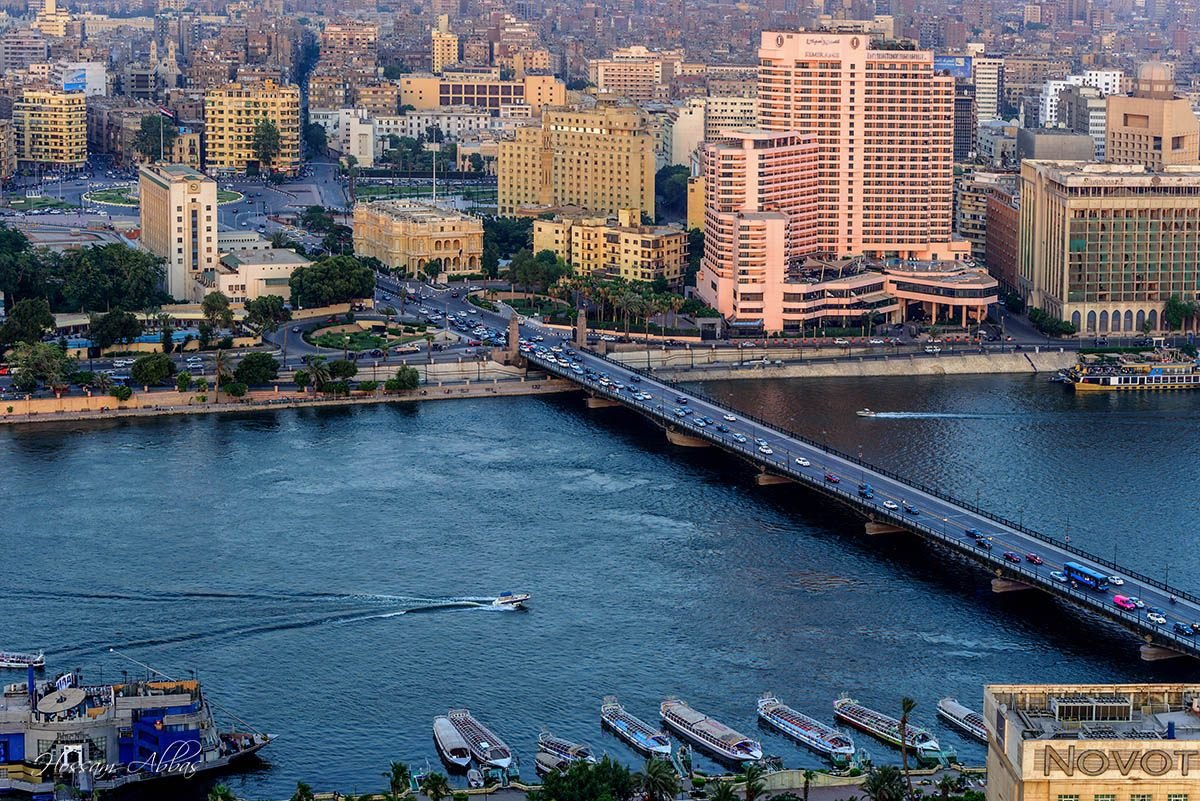
Step into the famous land of the pharaohs and wonder at its ancient temples, pyramids, tombs, mummies, and culture. Travel across Egypt and down its Nile in the 10-day luxurious private tour. In this luxury tour of Egypt, you will get to explore Egypt’s main attractions in Cairo, Luxor, and Aswan. In Cairo, you will get to see many attractions such as the Great Pyramids of Giza, the Egyptian Museum, the Citadel of Salah al-Din, and Coptic Cairo where you will visit the Hanging Church. When you are done with Cairo, you will travel south through the Nile River on a Nile cruise from Luxor to Aswan where you will spend 4 nights. In Luxor and Aswan, you will get to see many monuments such as Karnak Temple, Valley of the Kings, Temple of Queen Hatshepsut, and Temple of Philae.

Experience Egypt and feel like royalty only with Khaled Abbass Tour Guide

Itinerary
  • I will meet you at Cairo International Airport. Then I will accompany you to the hotel by a private luxury air-conditioned car. At the hotel, the tour manager assists you for a smooth check-in and then I am going to review the vacation package itinerary with you to re-confirm pickup times for each tour and activity. Overnight in Cairo.
  • Start your day tour to Giza Necropolis where our driver will pick up you from your hotel in Cairo or Giza and join our professional tour guide to witness the real magnificence ancient Egyptian attractions through visiting:
    The Open-Air Museum of Memphis
    The Open-Air Museum of Memphis offers an educational and insightful journey through ancient Egyptian history. The experience is not just about admiring the colossal statues or analyzing the intricate carvings but about genuinely immersing oneself in the past, appreciating the cultural richness of a civilization that continues to influence our present.
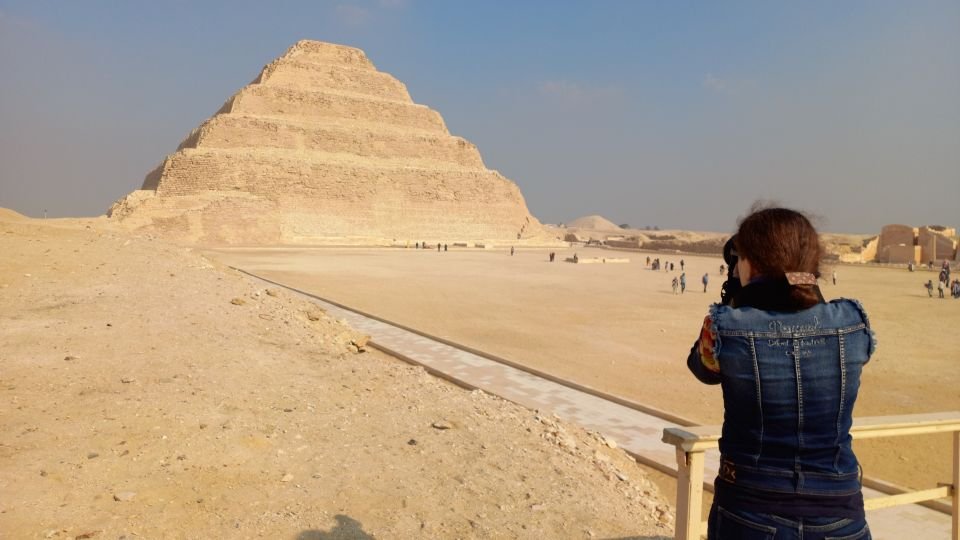
    The Step Pyramid of Saqqara
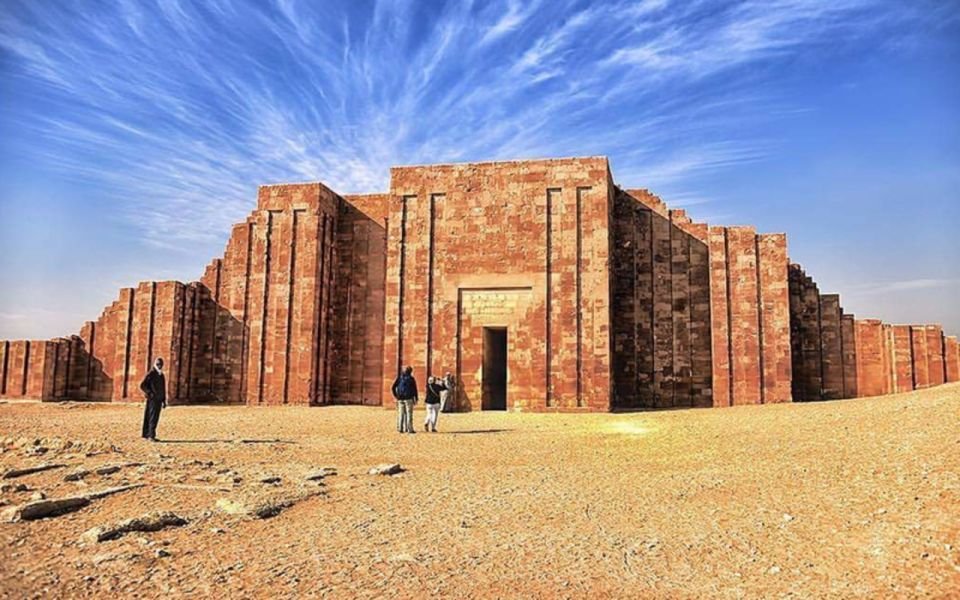
    It’s called also step Pyramid of Zoser or Josser, due to the King Zoser who ordered his minister Imhotep to build it, this pyramid consists of six-layers, its height was about 197foot (60 meters). It is the first Pyramid ever built and it is the first largest scale stone building in the world.
    Pyramid of Unas
    The Pyramid of Unas is a smooth-sided pyramid built in the 24th century BC for the Egyptian pharaoh Unas, the ninth and final king of the Fifth Dynasty.
    The Serapeum at Saqqara
    The Serapeum at Saqqara is the tomb of the sacred Apis bulls that were associated with the god Ptah, whose cult center was in Memphis. An avenue of sphinxes leads to the Serapeum, which is composed of two long corridors that once housed the mummified remains of the bulls. The tomb was in use from the time of Amenhotep III in the New Kingdom through to the Ptolemaic Period.
    Pyramid Complex of Teti
    Teti (c.2345–2323 BC), the first ruler of the Sixth Dynasty, built his pyramidal complex not far from the Step Pyramid of (c.2667–2648 BC), in Saqqara. Upon completion, it stood 52.5 m tall.
    The mastaba tomb of Kagemni also known as Memi
    The mastaba was discovered in 1843 by Richard Lepsius. It had to wait until 1905 before von Bissing would begin his publication of rooms IV to VIII, which wasn't completed until 1911.
    The mastaba of Nikauisesi
    The mastaba of Nikauisesi is situated in the north-east sector of the necropolis of Saqqara. The tomb was discovered in 1979-80 by the Supreme Council of Antiquities
    The mastaba of Ankhmahor
    The mastaba of Ankhmahor is situated on the northern side of Teti’s pyramid at Saqqara in the block of tombs belonging to the officials of the king’s Dynasty VI reign.
    At the end of this exciting day, you will be driven back to your hotel after you will enjoy your lunch in one of the best local restaurants.
    Overnight in Cairo
    Meals: Breakfast & Lunch
  • At 09 am you will meet your tour Guide and start your day to the great Pyramids area which includes:
    Giza Pyramids Complex
    The three main pyramids of Giza (Khufu, Khafre, and Menkaure) are sufficient enough to build a 2-meter-long wall and span 100,000 square kilometers around the globe along with the equator.
    The Great Pyramid (Extra Ticket)
    The Great Pyramid of King Khufu is considered largely represents the spirit of ancient Egypt, King Khufu who built this Pyramid as a cemetery has left little information about his reign. Khufu ruled for about twenty-four years. Ironically, despite the enormity of his pyramid, the only statue of King Khufu himself is really small statue carved from ivory.
    Camel Ride
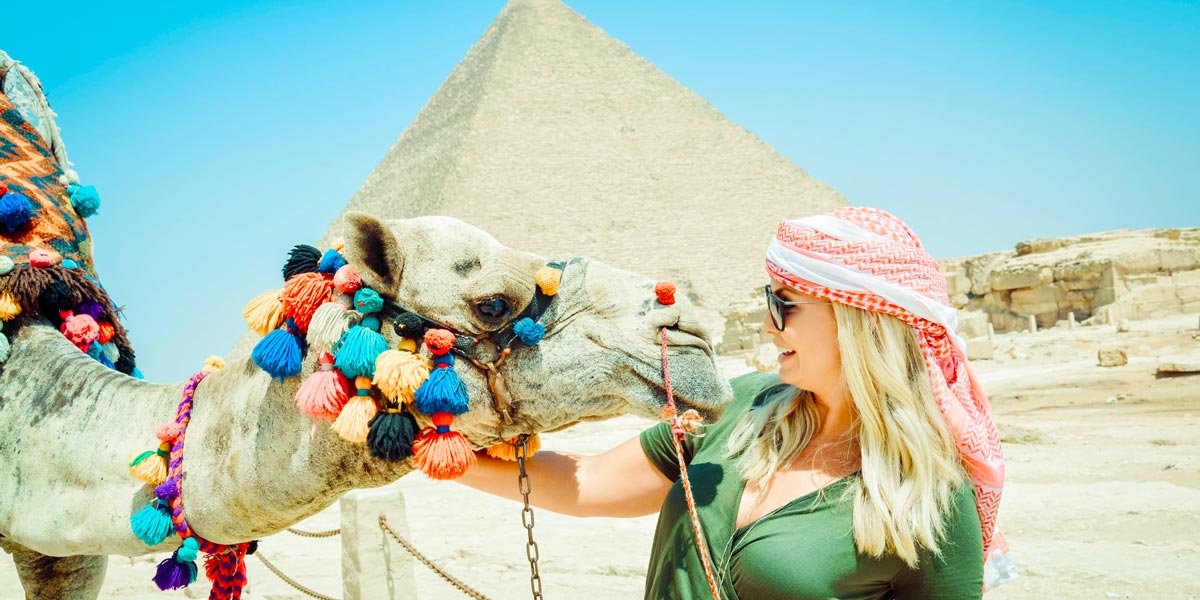
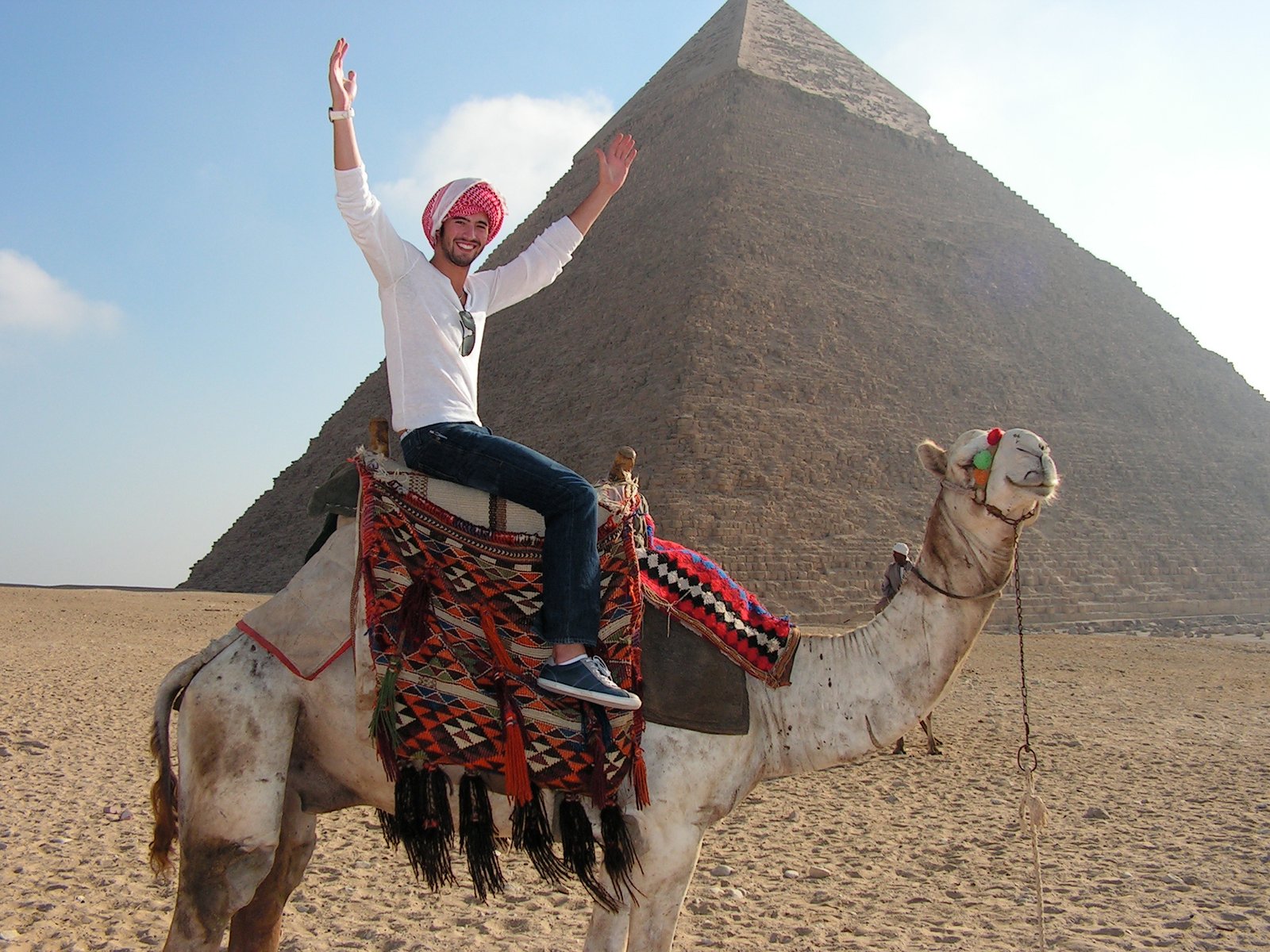
    During our visit to the Pyramids, you will experience the transportation of the ancient and will enjoy a camel to get the best shots around the pyramids you just need to prepare your camera.
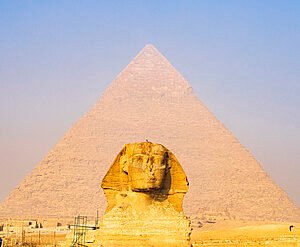
    The Magical Sphinx
    Who among us when mentioning the name of the Sphinx does not think about this stone sculpture that carved in the form of the human head and lion body, which is located in the Giza plateau in Egypt the Sphinx is one of the oldest and the largest sculptures in the world, it’s about 73.5 meters long and 6 meters wide.
    The Valley Temple
    It was used as a place for the embalming process. This temple constructed definitely for two functions: First, it was used for the purification of the mummy before its burial. Second, it was used for making the Mummification process of the king.
    The Grand Egyptian Museum
    The museum houses a collection of the most valuable Egyptian artifacts ever from various periods of the Egyptian civilization, from the Predynastic Period to Coptic Egypt, with an estimated total of over 100,000 artifacts, including at least 20,000 that will be displayed for the first time ever, including the complete King Tutankhamun collection comprising 5,398 pieces. The Tut collection is on display in a 7,500 m2 section of the museum. Rare pieces that have been restored will be displayed for the first time, such as the second solar ship of Khufu, the restoration of which cost $5 million, the collection of Queen Hetepheres (mother of King Khufu), and the collection of Yuya and Thuyu (parents of Queen Tiye).
    Overnight in Cairo
    Meals: Breakfast & Lunch
  • After breakfast, you will check out and our representative will escort you to the airport for your flight to Luxor. Upon arrival, you will be met and assisted by our representative who will transfer you to your Nile Cruise. After lunch, you will be taken to visit the magnificent Karnak and Luxor Temples. Karnak Temple
    The Complex of Karnak Temples
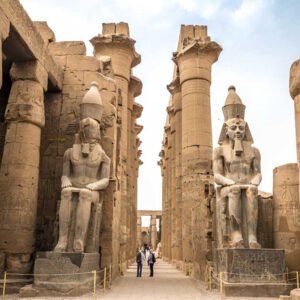
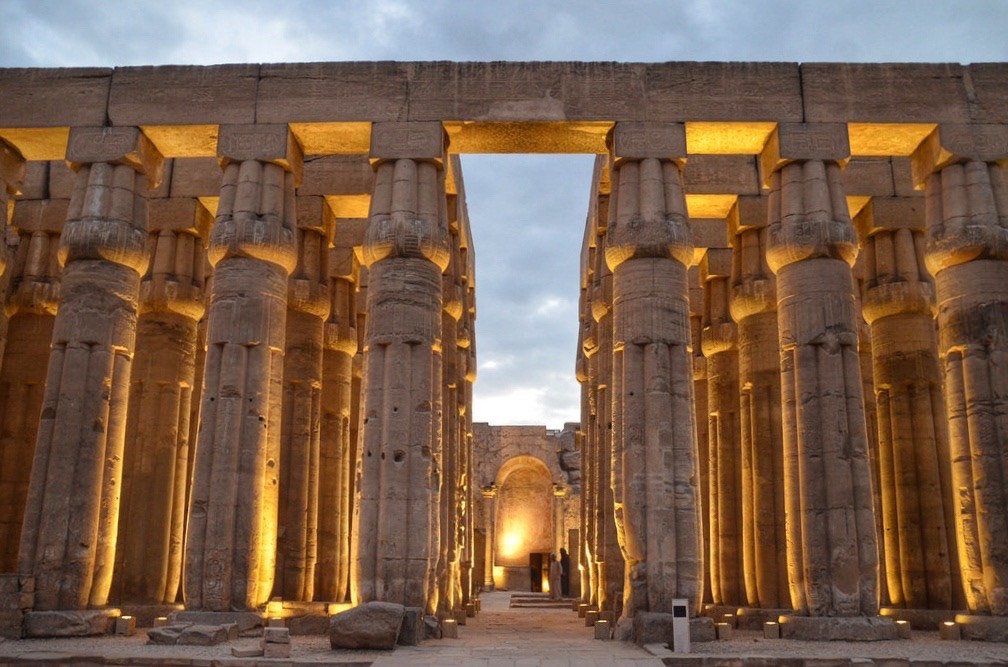
    Built over two millennia between the years of around 2200 and 360 BCE, Karnak is a massive Ancient Egyptian temple complex that was one of the country's most important places of worship under the rules of Hatshepsut, Seti I, Ramesses II and Ramesses III. As well as the dominating Temple of Amun-Ra, Karnak is also made up of smaller chapels and sanctuaries dedicated to other deities, as well as grand halls, docks, a sacred lake. and pylons - the monumental gateways that mark temple entrances.:
    The Temple of Luxor
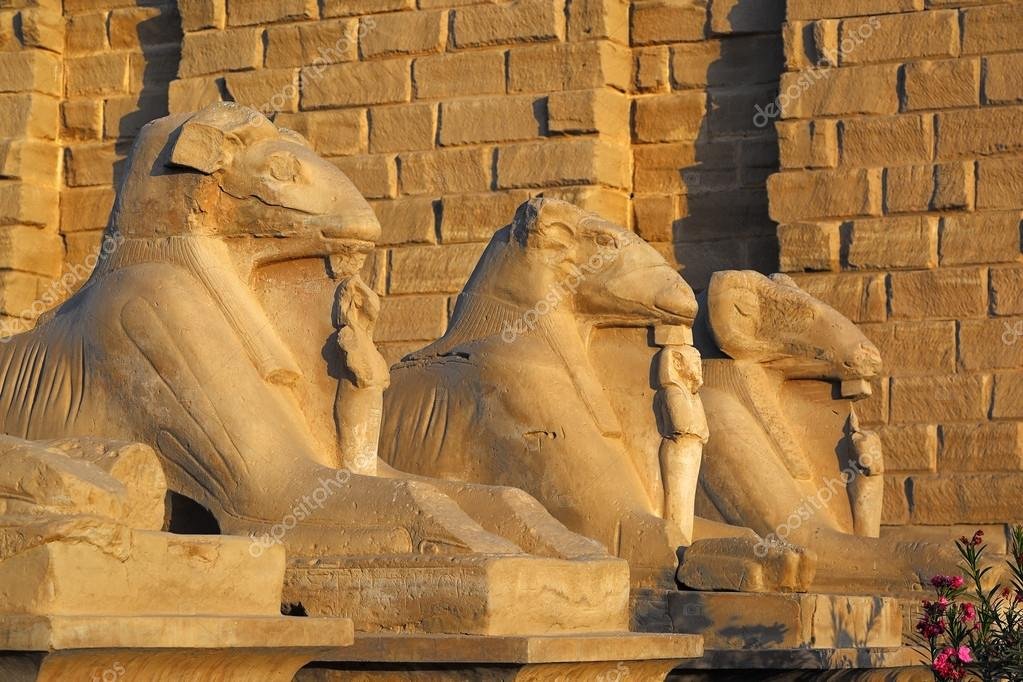
    Luxor Temple, Ipet‑resyt “Southern Sanctuary” to the ancient Egyptians, was so called because of its location within ancient Thebes (modern Luxor). It is located around three kilometers to the south of Karnak Temple, to which it was once linked with a processional way bordered with sphinxes. The oldest evidence for this temple dates to the 18th Dynasty (c.1550–1295 BC).
    Now our representative will take you back to your Nile Cruise in Luxor to finish your unforgettable day trip.
    Overnight in Nile Cruise
    Meals: Breakfast, Lunch & Dinner
    Karnak Temple Impressive Sound and Light Show Optional Tour
    Among the bewitching activities that you can enjoy in the miraculous city, “Luxor” is attending the breathtaking Sound and Light show which is arranged in Karnak temple Complex and it is considered an hour and half hour spectacular Hollywood style extravaganza. The site there recounts the great history of Thebes “The ancient Capital” as Karnak Temple was mainly constructed to honor the god Amun. The most interesting thing to do is to walk through that great temple at night and witness the real glory of ancient architecture.
  • In the beautiful morning after breakfast, our tour guide will meet you to take you to enjoy a journey in the west bank of Luxor where you will visit:
    The Valley of the Kings
    The rulers of the 18th, 19th, and 20th Dynasties of Egypt’s prosperous New Kingdom (c.1550–1069 BC) were buried in a desolate dry river valley across the river from the ancient city of Thebes (modern Luxor), hence its modern name of the Valley of the Kings. This moniker is not entirely accurate, however, since some members of the royal family aside from the king were buried here as well, as were a few non-royals, albeit very high-ranking, individuals.
    The Tomb of Tut Ankh Amun
    Despite the riches it contained, the tomb of Tutankhamun, number 62 in the Valley of the Kings, is in fact quite modest compared to the other tombs on this site, in both size and decoration. This is most likely due to Tutankhamun having come to the throne very young, and even then ruling for only around nine years in total. One can wonder at what riches the much larger tombs of the most powerful kings of the New Kingdom, such as Hatshepsut, Thutmose III, Amenhotep III, and Ramesses II once contained.
    The Tomb of King Merenptah
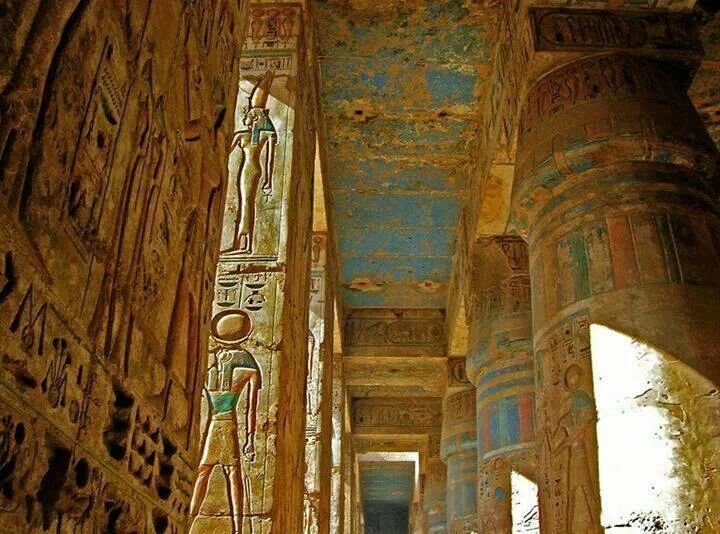
    The second-largest tomb in the valley, Merenptah’s tomb has been open since antiquity and has its share of Greek and Coptic graffiti. Floods have damaged the lower part of the walls of the long tunnel-like tomb, but the upper parts have well-preserved reliefs. The corridors are decorated with the Book of the Dead, the Book of Gates and the Book of Amduat. Beyond a shaft is a false burial chamber with two pillars decorated with the Book of Gates.
    The Tomb of King Ramses IV
    Originally intended to be much larger, KV 2 was cut short at 89m on the early death of the pharaoh (1147 BC) and a pillared hall was converted to be the burial chamber. The sarcophagus is in place with a magnificent goddess Nut filling the ceiling above it. Close to the entrance of the valley, this tomb was opened in antiquity and inhabited (there is Greek, Roman and Coptic graffiti), and used as a hotel by many 18th- and 19th-century visitors.
    The Tomb of King Ramses III
    One of the most popular tombs in the valley, KV 11 is also one of the most interesting and best preserved. Originally started by Sethnakht (1186–1184 BC), the project was abandoned when workers hit the shaft of another tomb (KV10). Work resumed under Ramses III (1184–1153 BC), the last of Egypt’s warrior pharaohs, with the corridor turning to the right, then left. It continues deep (125m overall) into the mountain and opens into a magnificent eight-pillared burial chamber.
    The Temple of Hatshepsut
    Hatshepsut (c.1473–1458 BC), the queen who became Pharaoh, built a magnificent temple at Deir al-Bahari, on the west back of Luxor. It lies directly across the Nile from Karnak Temple, the main sanctuary of the god Amun. Hatshepsut’s temple, Djeser-djeseru “the Holy of Holies” was designed by the chief steward of Amun, Senenmut.
    The Colossi of Memnon
    These two faceless colossi (the plural of colossus, which just means larger-than-life statue) are the first thing visitors see when they reach the west bank of the Nile opposite Luxor. This isn't surprising when you hear their dimensions: they tower 60 feet (18 m) above the plains and are estimated to weigh an enormous 720 tons each.
    Now our representative will take you back to your Nile Cruise in Luxor to finish your unforgettable day trip.
    Overnight in Nile Cruise
    Meals: Breakfast, Lunch & Dinner
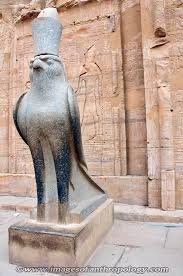
  • You can enjoy an early breakfast. Once the boat is moored you will visit the best-preserved temple in Egypt: The Temple of Horus. After your visit to this superb temple, you will be taken back to the boat for your lunch while the cruise boat continues sailing towards Kom Ombo
    Edfu Temple
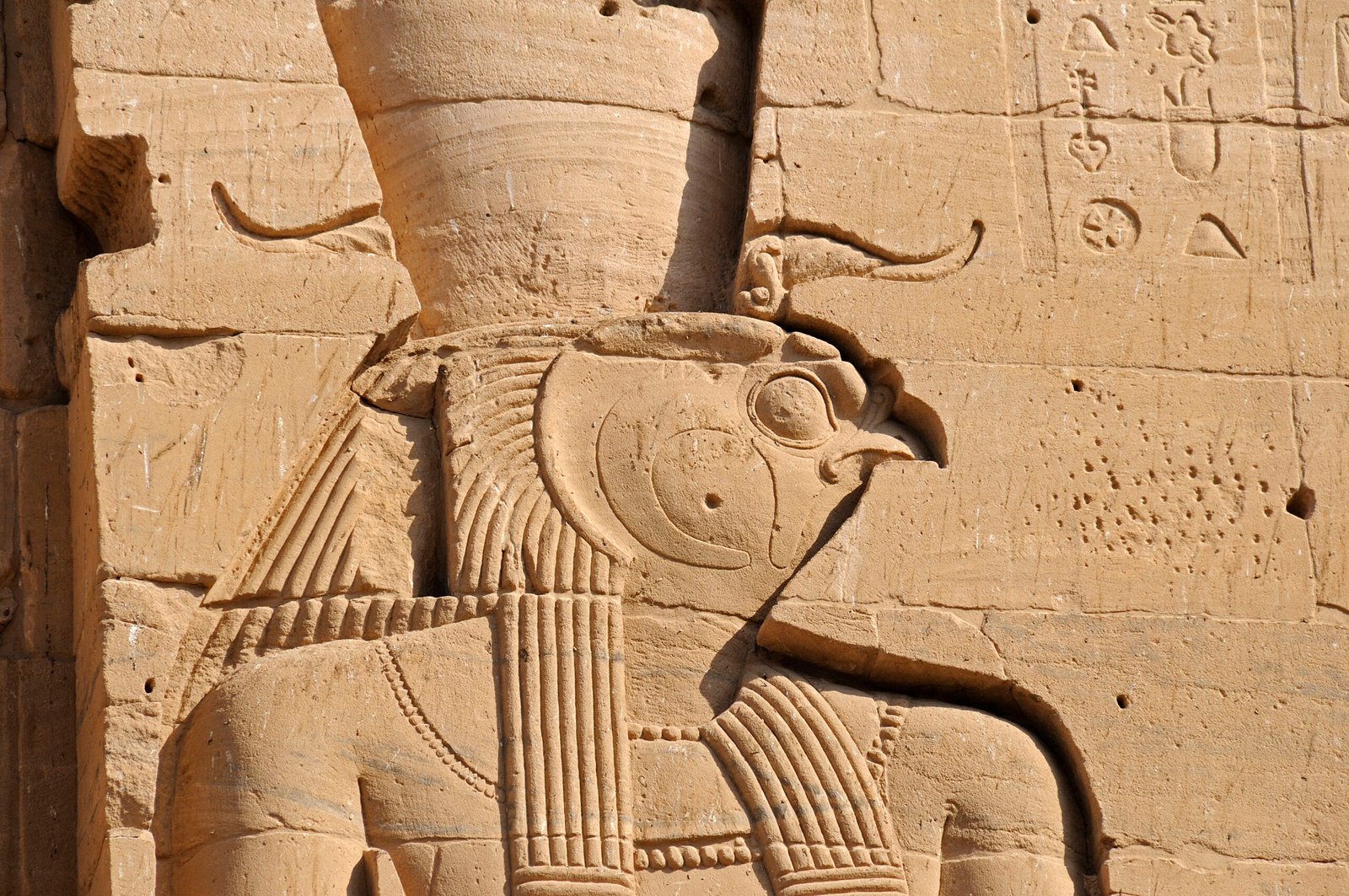
    Edfu temple which was dedicated to Horus, the son of Isis and Osiris and its walls are really impressive with its inscriptions and pictures showing Horus having his revenge from Seth the brother of his father Osiris. It is the best preserved and most complete in Egypt temple and second largest after Karnak.
    Enjoy sun bathing and tea time on the deck of the Cruise. Once a shore you will visit the Temple of Kom Ombo, dedicated to the gods Horus and Sobek. After this great visit you will return back to the cruise for your dinner being served as it sails majestically towards Aswan.
    The temple of Sobek in Kom Ombo
    The Temple of Kom Ombo is an unusual double temple in the town of Kom Ombo in Aswan Governorate, Upper Egypt. It was constructed during the Ptolemaic dynasty, 180–47 BC. Some additions to it were later made during the Roman period. The building is unique because its 'double' design meant that there were courts, halls, sanctuaries and rooms duplicated for two sets of gods.
    After the visit, you will be taken back to the boat for your dinner while it sails onward to Aswan.
    Overnight in Nile Cruise
    Meals: Breakfast, Lunch & Dinner
  • At the morning, enjoy your breakfast on the cruise then you will join your tour guide to the enchanting “Abu Simbel Temple” which is known to be a true piece of art. The two temples were carved out of the mountainside in 1200 BC during the reign of Pharaoh Ramesses II the second and his wife Queen Nefertari.
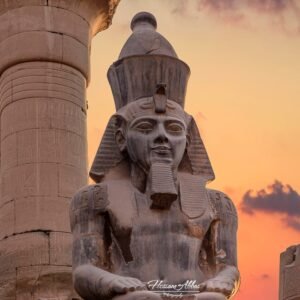
    All the carvings, artwork, wall paintings, statues are extremely beautiful and tell incredible stories about Ramses victories at the battle of Kadesh and honor many gods like Ra, Amon, and Ptah.
    Abu Simbel Temples
    Abu Simbel temple complex includes 2 individual temples that were built during the reign of Pharaoh Ramses II. The great temple was built for the king himself to commemorate his coronation and his birthday and it has been built in a very impressive accurate way which makes the whole world await the Sun Festival that occurs only twice a year in the great temple of the Pharaoh to witness the miracle that occurs there. The smaller temple was built as a sign of love & appreciation from the king to his beloved queen Nefertari and she was the only wife of the king for whom he has built a temple.
    After enjoying our great tour to these amazing temples, we will return back to the Cruise where we will have our lunch and then the rest of the day is yours. Dinner will be served later onboard and overnight.
    Overnight in Nile Cruise
    Meals: Breakfast, Lunch & Dinner
  • A new day starts with breakfast, and then you will enjoy your day tour to Aswan where your guide will take you to see the High Dam, the Temples of Philae, the unfinished Obelisk, check in your Nile cruise and have lunch and then visit The Nubian village and the Botanical Island. Your visit includes:
    Aswan High Dam
    At Aswan High Dam, you’ll hear from your tour guide the whole story of its construction and how it helped the Egyptians a lot to improve their economic and social state. Then, you’ll move to witness the miraculous:
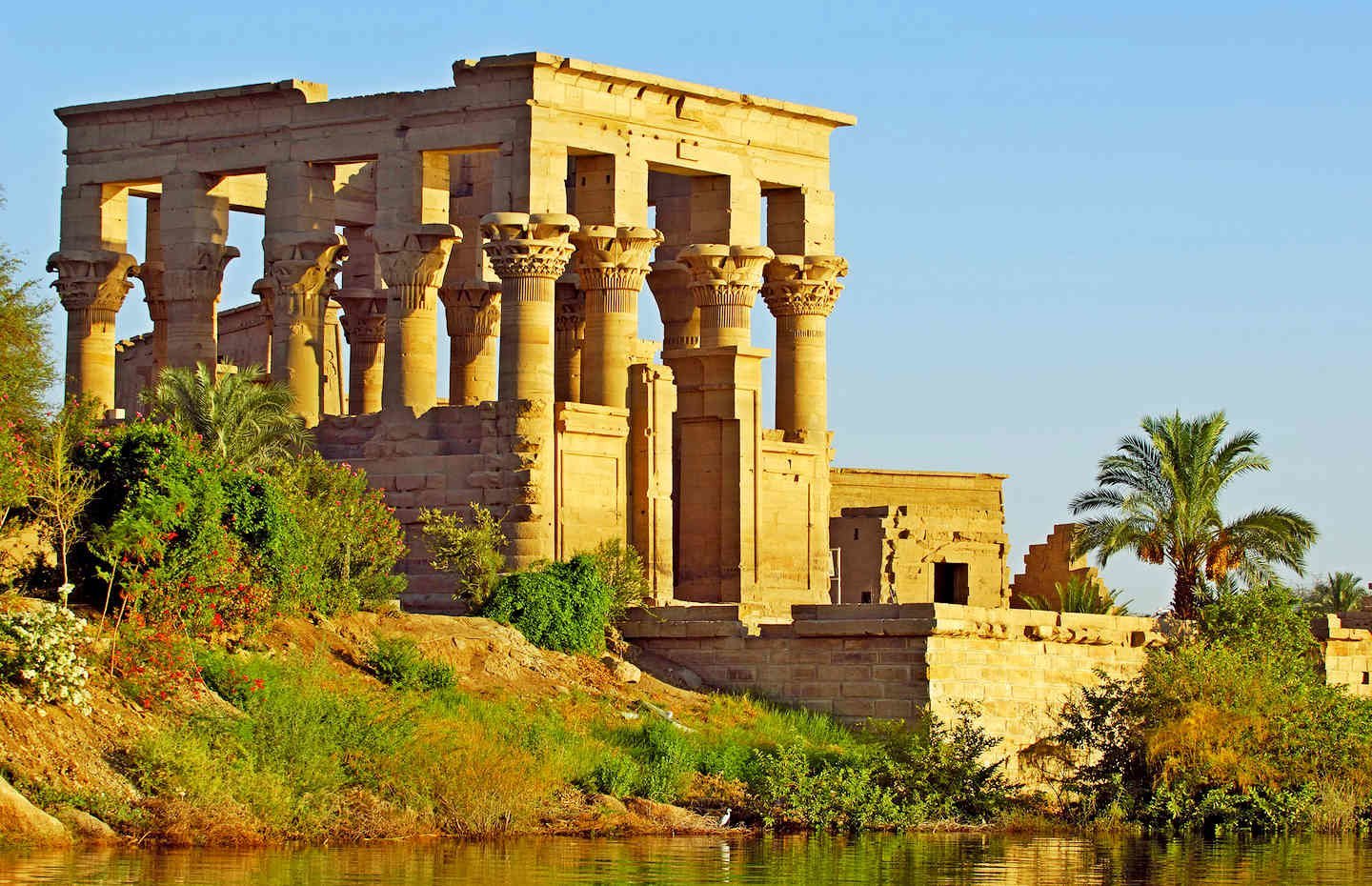
    Philae Temples
    Philae Temple was constructed in 690 B.C and it had been relocated with the help of the UNESCO because it was in great danger from the High & Low Dams of Aswan. It was dedicated to goddess Isis.
    After the end of the tour, you will be driven to Aswan airport to catch your flight back to Cairo where you will meet our representative to drive you to your hotel in Cairo and overnight.
    Overnight in Cairo Hotel
    Meals: Breakfast, Lunch
    The Nubian Village & The Botanical Island optional tour
    Discover the colorful culture of Nubia, one of Africa's oldest civilizations, traveling by felucca sailboat or modern motorboat, you'll meet locals, visit a traditional house, drink tea, and have free time to explore villages independently while Kitchener’s Island, to the west of Elephantine Island, was given to Lord Horatio Kitchener in the 1890s when he was commander of the Egyptian army. Kitchener turned the entire island into the stunning Aswan Botanical Gardens, importing plants from the Far East, India and parts of Africa.
  • Breakfast at the hotel is followed by a full day tour, I will meet you at 8 am in the hotel lobby and start our visit to the
    The National Museum of Egyptian Civilization.
    The first museum of civilization in the Arab world, the NMEC will present a comprehensive view of Egyptian civilization from prehistory to the present day, taking a multidisciplinary thematic approach designed to highlight Egypt’s tangible and intangible heritage. A museum of a new kind, unknown so far in Egypt and the entire Middle East region, the NMEC’s main goal is to “share knowledge”, to connect with the surrounding Egyptian society and to offer international visitors a richer and deeper insight into the meaning of Egyptian culture through the ages.
    The Citadel of Cairo
    Salah Al-Deen (known as Saladin to European historians) overthrew the Fatimid dynasty in 1171 AD, establishing the new Sunni Ayyubid Caliphate. Given the threat of invasion by European crusader armies, Saladin decided to improve the fortifications of the city and in 1176 AD he began construction of a wall that would encircle both Al-Qahira (today Islamic) and Fustat (Old Cairo). Saladin’s Citadel served as the seat of government in Egypt for 700 years until Khedive Ismail moved into Abdin Palace in newly constructed Downtown Cairo in the 1870’s.
    Mohamed Ali Mosque
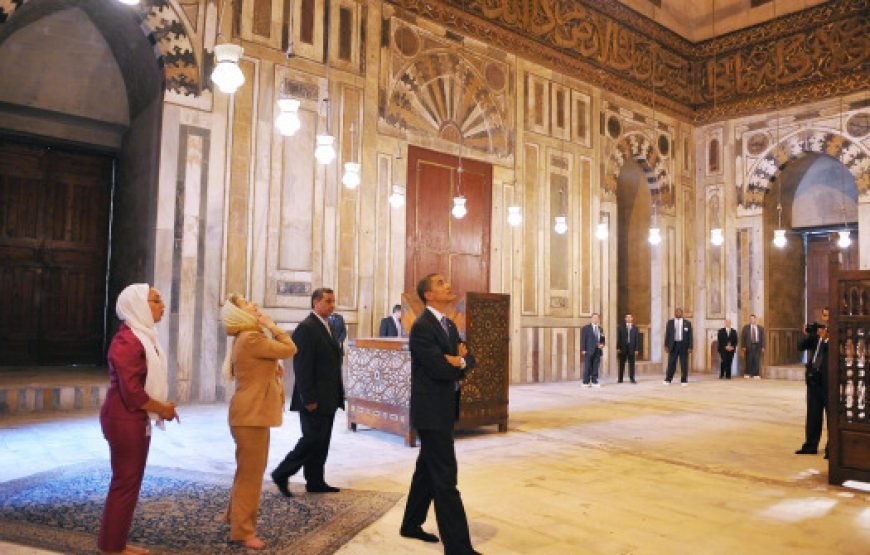
    The Mosque of Muhammad Ali is located inside the Citadel of Salah al‑Din al‑Ayyubi (Saladin) in Cairo. It was built by Muhammad Ali Pasha (1220–1264 AH/1805–1848 AD), the founder of the Muhammad Ali Dynasty (1220–1372 AH/1805–1953 AD), on the site of Mamluk palaces. He had these demolished to make room for his new building, which is also known as the "Alabaster Mosque", in reference to its marble paneling on its interior and exterior walls. The mosque’s twin minarets are the highest in all of Egypt, each reaching a height of 84 meters.
    National Military Museum
    This museum is the first of its kind to be devoted to the history of the Egyptian military through the ages. The museum was first located in the building of the Ministry of Defense in Falaki in 1937, after which it was transferred to another building in the neighborhood of Garden City in 1938, before finally being transferred to al-Haram Palace in 1949 in the Cairo Citadel in 1949.
    National Police Museum
    The National Police Museum is one of the museums in the Salah al-Din Citadel, located in its northern section. Its exhibitions display the history of Egypt’s police force.
    Moaiz ST & Khan Khaliili
    Elmoaz Street the largest open-air museum for Islamic monuments in the world, and a unique heritage site that was added to The UNESCO World Heritage List in 1979. While Khan Khalili is One of the wonderful places in Cairo and the oldest market in the Middle East it’s a medieval-style mall.
    Enjoy your lunch and it will be served at a local restaurant after the day tour. Then return to your hotel and overnight in Cairo.
    Overnight in Cairo
    Meals: Breakfast & Lunch
  • Enjoy your breakfast at your hotel. You will be taken to Aswan Airport to fly to Cairo. It is time in Cairo International Airport for the final departure.
    Meals: Breakfast
  • Experience
    • Highlights
    • Standard 5 Stars Accommodation in Cairo
      Standard 5 Stars Accommodation in Hurghada
      Free Camel ride at the Pyramids area
      Free Wifi internet.
      Free entry to king Tut Ankh Amun Tomb
      Free visit to the Serapium of Sakkara.
    • Includes
    • Arrival / departure assistance
      05 nights’ accommodation in a standard 5 stars hotel in Cairo on Bed and breakfast basis. Steigenberger or similar
      04 nights’ accommodation in board of a Standard 5 stars Nile Cruise on full board basis. (3 meals included).
      All transfers as per program by private and deluxe air-conditioned vehicle for all transportation.
      Private English-speaking Egyptologist guides as per the itinerary. (Any language is available).
      Entrance fees for all sightseeing.
      All applicable taxes are included.
      Meals as mentioned in the itinerary.
      Domestic flight ticket Cairo / Luxor/ Aswan /Cairo.
    • International airfares.
      Egypt entry Visa.
      Personal expenses (laundry, telephone calls, etc.
      Tipping for guides, driver, Nile cruise crew, etc…
      The Great Pyramid entry fees.
      Drinks on cruise board and during meals.
      Optional Tours

    Be the first to review “Egypt Standard Tour Packages 10 days Cairo »04 nights Luxor – Aswan Nile Cruise”

    Your email address will not be published. Required fields are marked *

    Starts from $ 2235

    Date

    price to Adults

    $4,504.00
    1 Adult
    $2,845.00 (36% off)
    2 Adults
    $2,625.00 (41% off)
    3 - 5 Adults
    $2,385.00 (47% off)
    6 - 10 Adults
    $2,235.00 (50% off)
    11+ Adults
    Adults :